Sustainable Resource Management – Audi presents graduate award
07/02/2026 — Reading Time: 1 min
Purpose and scope of the Sustainable Resource Management Award
The Audi Environmental Foundation launched the SRM Award in 2010. The award honors graduates who have achieved outstanding results in their master's thesis in the Sustainable Resource Management program at the Technical University of Munich. The award is endowed with €1,500 and is presented once a year to a prizewinner.
The project partner
Master's Degree Programme in Sustainable Resource Management at the Faculty of Forestry and Resource Management of the Technical University of Munich. In an international atmosphere, students are familiarized with the diverse requirements for professional resource management. The aim is to learn about and apply the important concepts for sustainable management and to understand and control the interactions between man, nature and technology.
The SRM Award prize winners
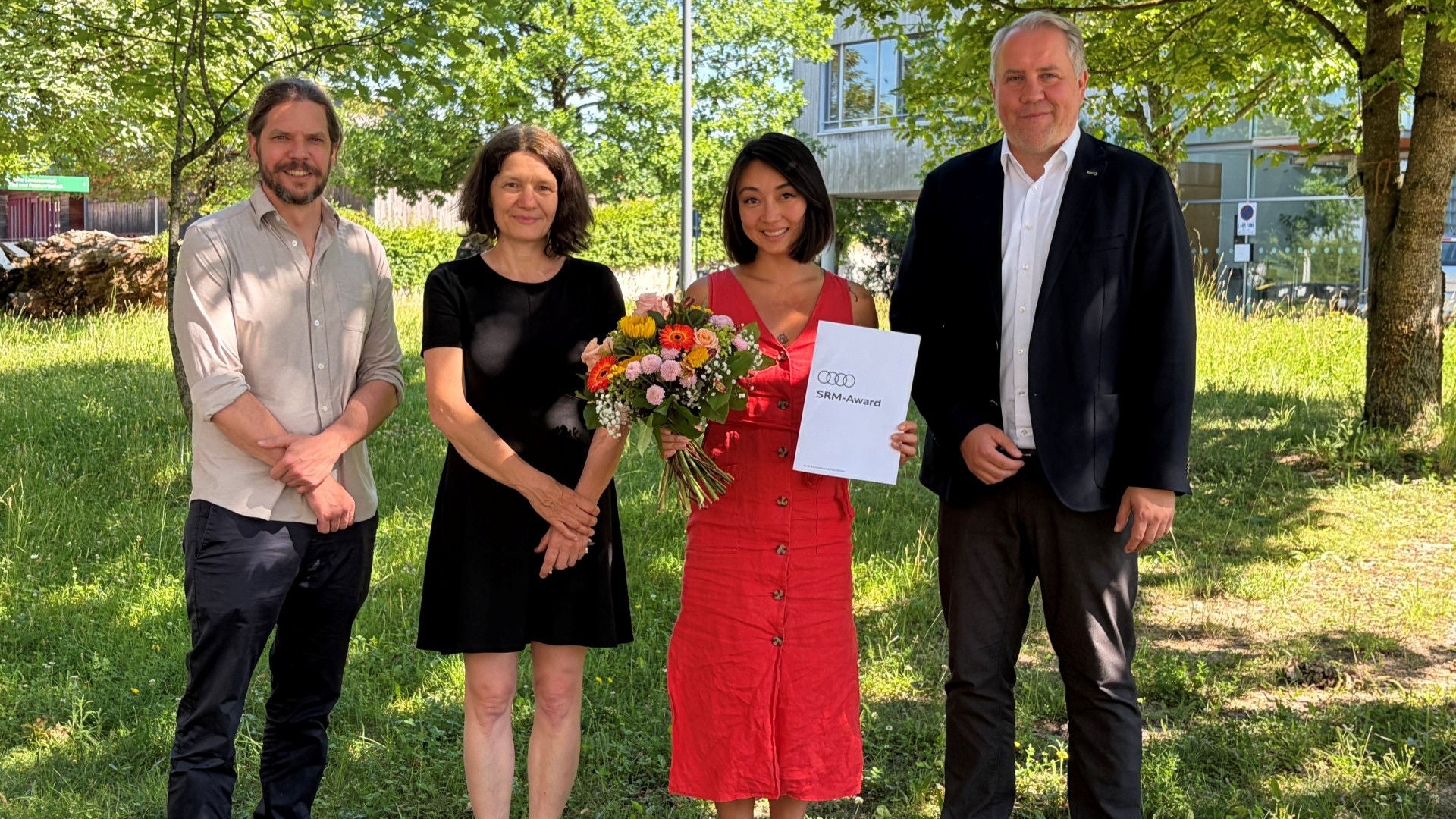
In June 2026, the Audi Environmental Foundation presented the SRM Award for the 15th time as part of the Sustainable Resource Management degree program. This year’s award for the best master’s thesis was presented to Mandy Cummings. Her thesis, titled “A Comparative Prospective Life Cycle Assessment (LCA) of Wood Energy Generation by Conventional Combustion and by Slow Pyrolysis Including Several Application Paths of Biochar,” examined different pathways for using wood for heat generation. The study focused on comparing conventional wood combustion with heat generation through pyrolysis. In addition, it analyzed potential applications for the biochar produced during the pyrolysis process. For the comparative life cycle assessment, possible substitute products for biochar as well as alternative heat sources were taken into account. The study also considered future developments in energy generation and uncertainties regarding the environmental impacts of different biochar application pathways. The results show that the pyrolysis-based system, including the production and application of biochar, leads to a lower climate impact than conventional wood combustion, despite its lower efficiency in heat generation. Among the various application pathways investigated, the use of biochar as a feed additive for ruminants resulted in the lowest net greenhouse gas emissions. Through her analysis of different utilization pathways and their environmental impacts, Mandy Cummings provides valuable insights for advancing sustainable approaches in both energy generation and agriculture.
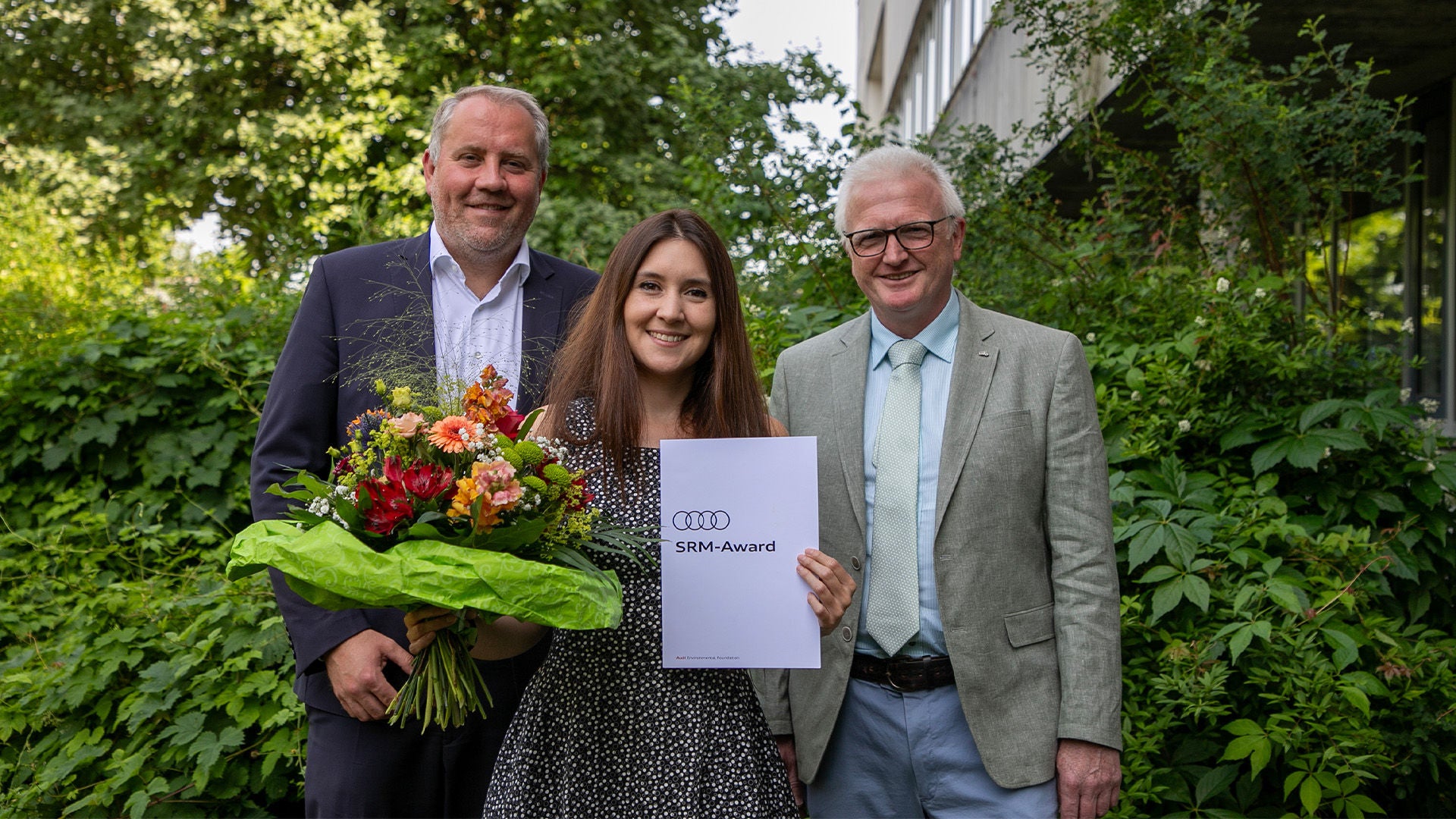
For the 14th time, the Audi Environmental Foundation has awarded the prize for the best master's thesis in the Sustainable Resource Management program. This year, Valentina Arros was honored as the recipient of the SRM Award 2024.In her thesis, "Optimization of interpretive signage for the protection of an endangered species in the natural park Ammergauer Alpen in Germany," Valentina Arros explored how informational signs in nature parks can be made more effective. Often, visitors are unaware that their recreational activities can harm the environment. The goal was to better inform visitors through signage while simultaneously promoting the protection of endangered species. Through targeted analyses, she developed visually appealing and more understandable signs that address the actual informational needs of recreation seekers. A successful blend of environmental protection and visual communication.
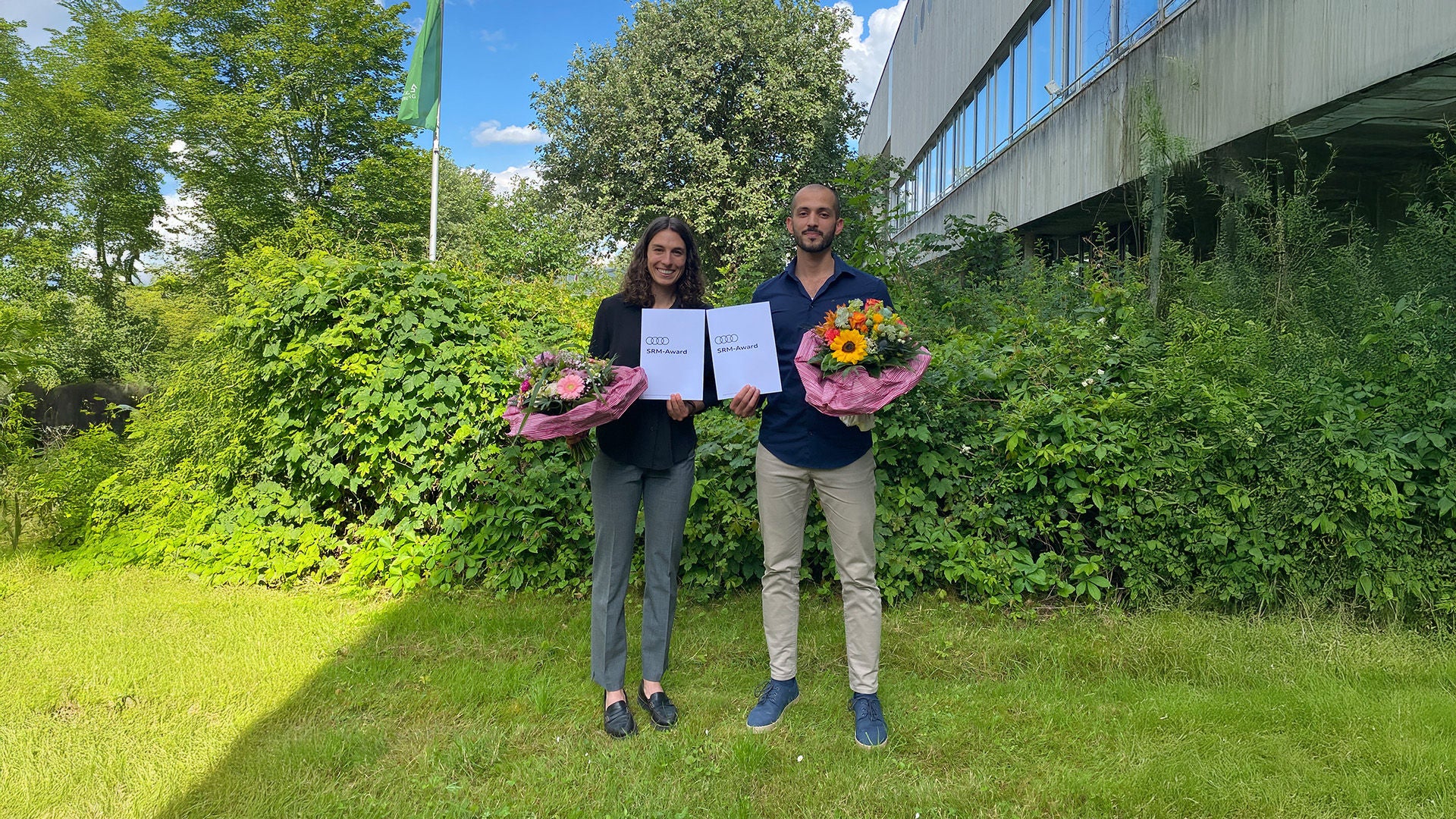
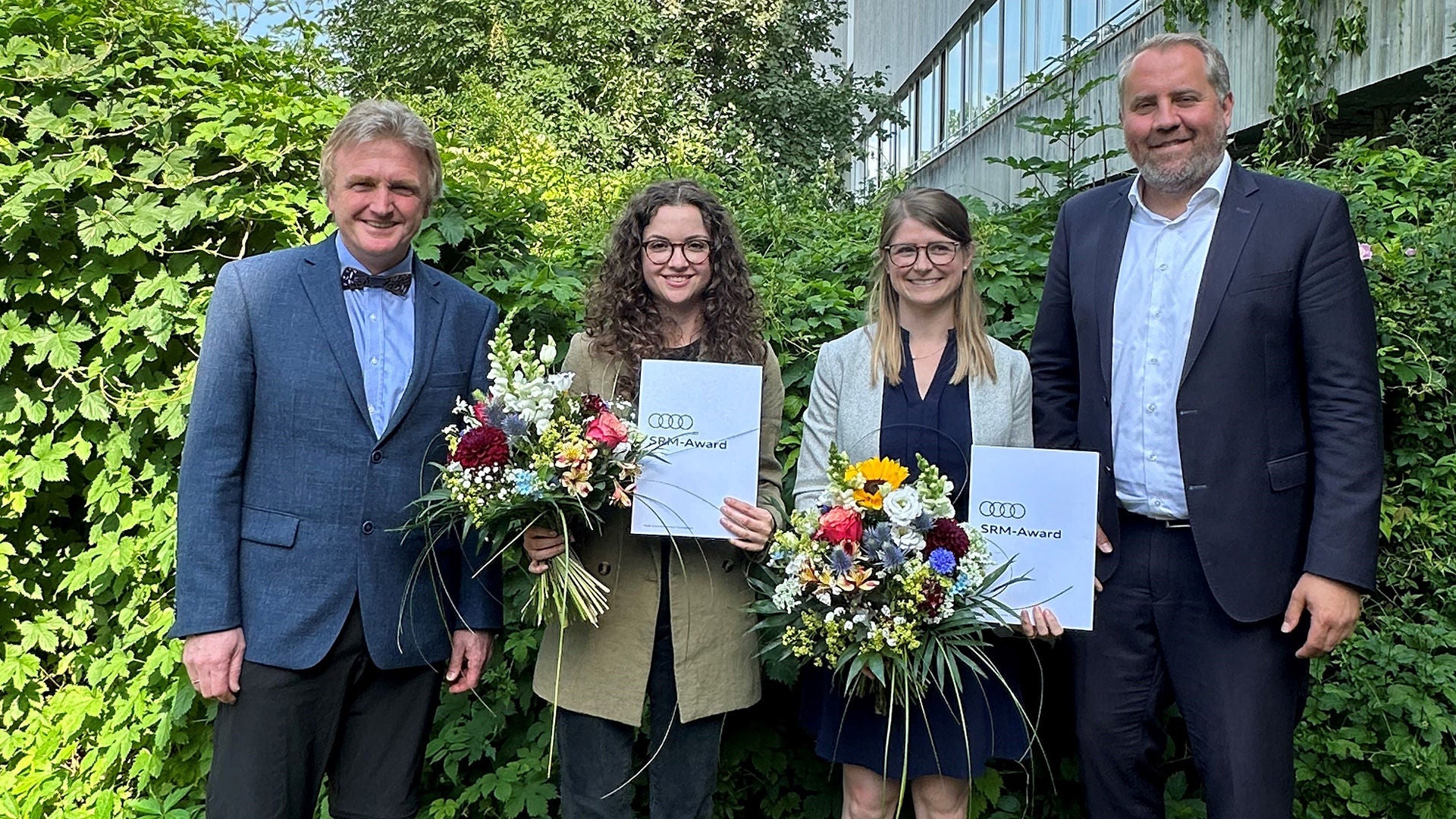
In May 2024, the Audi Environmental Foundation once again honored two graduates of the Technical University of Munich for their outstanding master's theses in the "Sustainable Resource Management" program. This year, Sina Heubel and lAhmad Awad received the "Sustainable Resource Management" (SRM) Award.In her master's thesis, Sina Heubel dealt with the future distribution of Europe's tree species under climate change scenarios. Relevant climate models predict a significant decline towards the end of the century for economically important tree species in Central Europe such as spruce and Scots pine, while pedunculate oak and maritime pine may offer possible alternatives. Heubel’s findings make an important contribution to the necessary forest conversion. With her work, she wants to "raise awareness of future developments, inspire action, and make a difference".In his thesis, Ahmad Awad conducted a detailed study of land use change in Amman, the capital of Jordan. He studied in detail the conversion of arable and pastureland into urban areas. This transformation leads to less water infiltration and more runoff into the valleys, which significantly increases the risk of lightning floods. His work provides valuable insights for local urban and land-use planning and highlights the need for development strategies to reduce land-use conflicts and risks associated with water runoff.
In May 2023, the Audi Environmental Foundation once again honored two graduates of the Technical University of Munich for their outstanding master's theses in the "Sustainable Resource Management" program. This year, Franziska Kraft and Alena Anderson Chilian-Heeb received the "Sustainable Resource Management" (SRM) Award. Franziska Kraft's master's thesis entitled "Central European wildfire regimes under climate change: a sensitivity analysis based on simulations with iLand" deals with process-based simulation models that take into account both forest development and the simulation of forest fires. This makes it possible to assess the consequences of an increase in forest fires, which, according to the current state of affairs, are still largely unexplored in Central Europe. Her thesis thus makes an important contribution to research on the topic of fire, forests and climate change. Alena Anderson Chilian-Heeb's master's thesis topic was: "Consequences of land-use change on soil carbon storage forms, microbial 13C incorporation, and C-P relationships in Amazonian Dark Earth and Acrisols from Brazil". In it, she dealt with sustainable soil fertility management and the function of soils as carbon sinks in the Amazon, which is particularly important in times of global change. In addition, dwindling soil fertility plays an important role in sustainable management.
For the second time, the SRM Award could only be presented digitally due to the pandemic. This time it was awarded to two prize winners whose research focussed on the topic of water. In February 2022, the "Sustainable Resource Management" (SRM) Award, endowed with 1,500 Euros, was presented for outstanding theses in this field. As in the previous year, the ceremony was held digitally due to the pandemic and the students were able to follow the presentations of the award winners in a live stream. Both theses dealt with the topic of water. In her master's thesis entitled "Water Supply Diversifications in Bavaria and California", Lauren Former compared the different ways of dealing with water management in Bavaria and California. From her analysis, she derived recommendations for dealing with increasing drought and the contamination of water with chemicals. In her master’s theses entitled "Impact of urban green spaces on storm water management – a meta-analysis", Yanin Pawijit presented the effects that different land uses in urban areas can have during heavy rainfall events and conclusions that can be drawn for the selection of certain tree species in cities. The evening ended with a guest lecture also dealing with the topic of water: "Using the water scarcity footprint against problem shifting – Insight into methodological development and applications". It was a successful event that received great interest from the audience, as the topic of water resources has become increasingly important in times of climate change.

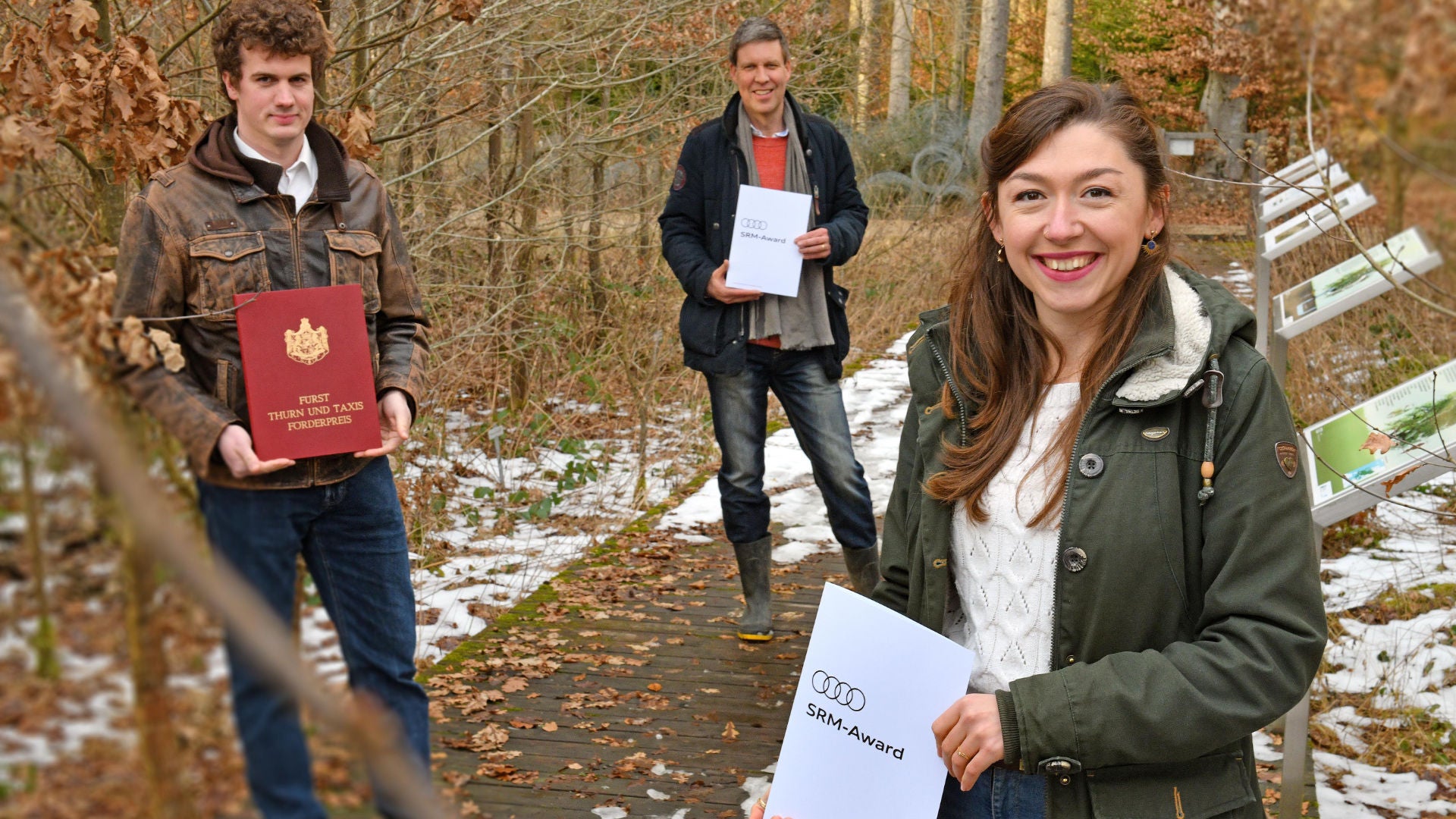
The SRM Award of the Audi Environmental Foundation was presented for the tenth time on March 9, this year due to Corona in a digital format as part of a joint event with the “Thurn und Taxis Förderpreis für Forstwissenschaft” (forestry sponsorship award). Even without any personal presence, the ceremony was a successful event that received great interest, as evidenced by the large number of students who participated virtually.We met the winners in our oak forest in Kösching a few days earlier. According to the current coronavirus measures, the official handover of the awards took place outdoors which created a very special atmosphere.Two researchers received the 1,500 Euro prize “Sustainable Resource Management” (SRM) award: Astrid Manciu and Tiffany Yu from the Technical University of Munich dealt with different aspects of the interactions between humans and the environment in their master’s theses.Astrid Manciu examined the role of vegetation in the climate system using the example of the tropical rainforests of Colombia. In the tropics, the interaction between vegetation and climate plays an important role. Colombia is a biodiversity hotspot and highly vulnerable to the effects of climate change. The rainforest has high deforestation rates, which makes Astrid Manciu's study highly relevant. She researched how global warming and the increasing deforestation of Colombia’s tropical rainforests affect the regional climate. Land-cover change lead to a reduction of precipitation mostly over deforested areas. With the help of a climate model, she was able to simulate her results and proved that climate change leads to a rise in temperature in Colombia, especially at high altitudes.Tiffany Yu’s research dealt with the positive effects of nearby nature on human health and the criteria for well-being in urban areas. Since there are usually few opportunities to have daily contact with nature in metropolitan areas, public green spaces are important for people to relax and relieve stress. To create effective, restorative environments in cities and to encourage residents to use them, urban planners need to understand people's environmental perceptions and preferences. For the data collection on this topic, Yu developed an original research design using participant-generated photo grouping. One of the results of her analysis is that the residents perceive pictures of “hidden” gardens and green spaces far away from city life as pleasant and more beautiful. With her master's thesis, she provides insights into how urban areas can be equipped with effectively designed green spaces for the people.
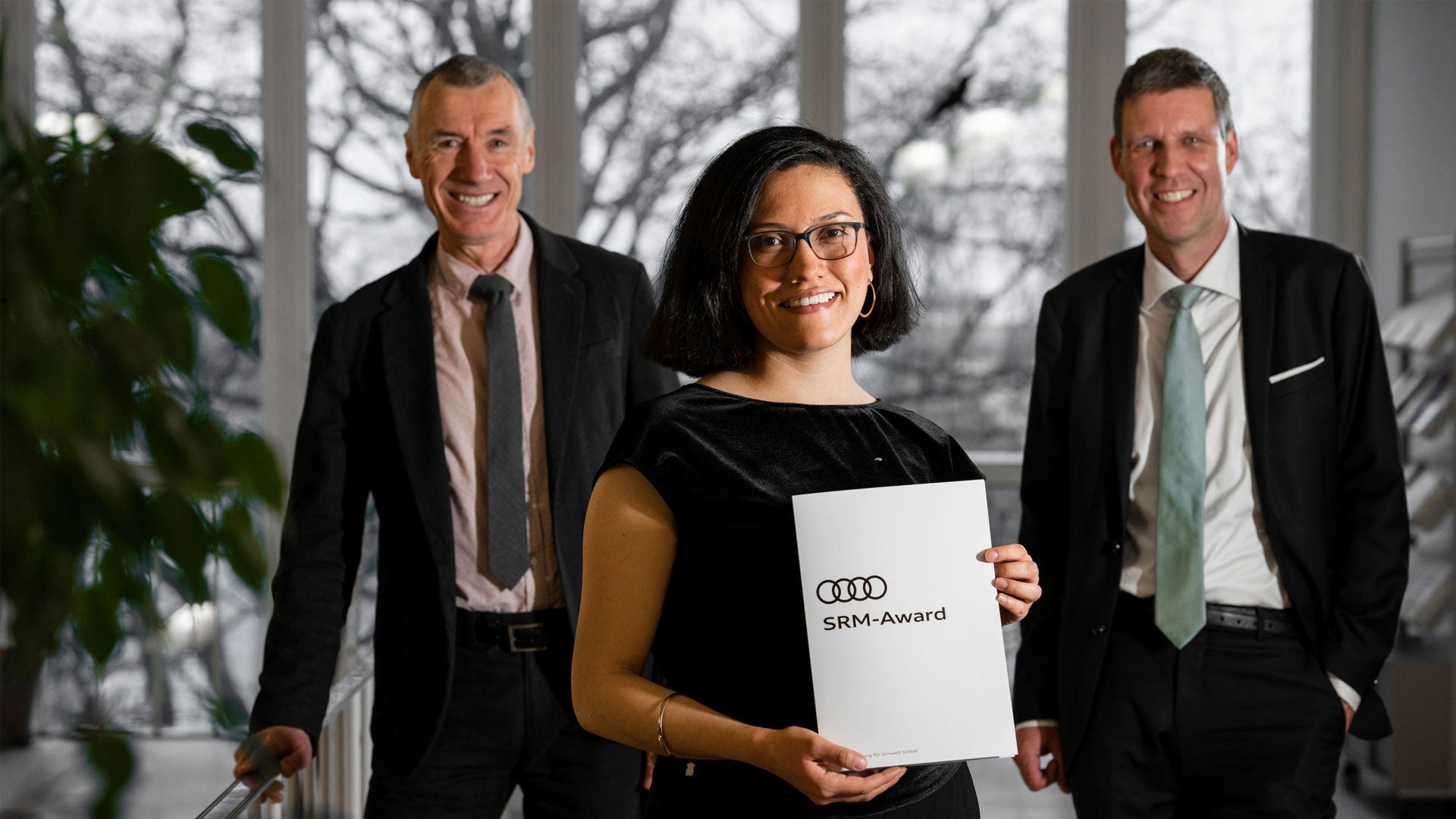
The Audi Environmental Foundation has honored the master’s thesis of a young researcher from the Technical University of Munich (TUM) with the “Sustainable Resource Management Award” (SRM). The prize, which was awarded for the ninth time, went to Dayana Ramirez Gutierrez. The scientist delved deeper into “Stakeholder Knowledge Mapping” (SKM) and developed a concept for initial operationalization. The award winner received EUR 1,500 for her academic thesis. Dayana Ramirez Gutierrez wrote her master’s thesis as part of the EU research project “PHUSICOS.” The project examines the development and acceptance of nature-based solutions involving natural resources for adapting to climate change in Europe’s rural areas. Ms. Gutierrez addressed the question as to how the knowledge of various stakeholders can be bundled and utilized. The aim is to incorporate the knowledge of the region held by local residents, experts, and other stakeholders into the process of shaping the environment and to thereby ensure a higher level of acceptance. The young Columbian also highlights the challenges that arise when involving various stakeholders in environmentally relevant decision-making-processes. Living laboratories in the pilot regions in Norway, the Pyrenees, Italy, Austria, and Germany use the theoretical groundwork established by Gutierrez to co-design their climate protection solutions. The Audi Environmental Foundation has been supporting young scientists whose ideas make valuable contributions to resources management since 2009. “Dayana Gutierrez takes a descriptive and creative approach to addressing a problem that concerns us all. By pointing out how local residents must be approached and involved in order to implement nature-based solutions, she creates a basis for developing concrete programs,” says Rüdiger Recknagel, Managing Director of the Audi Environmental Foundation.
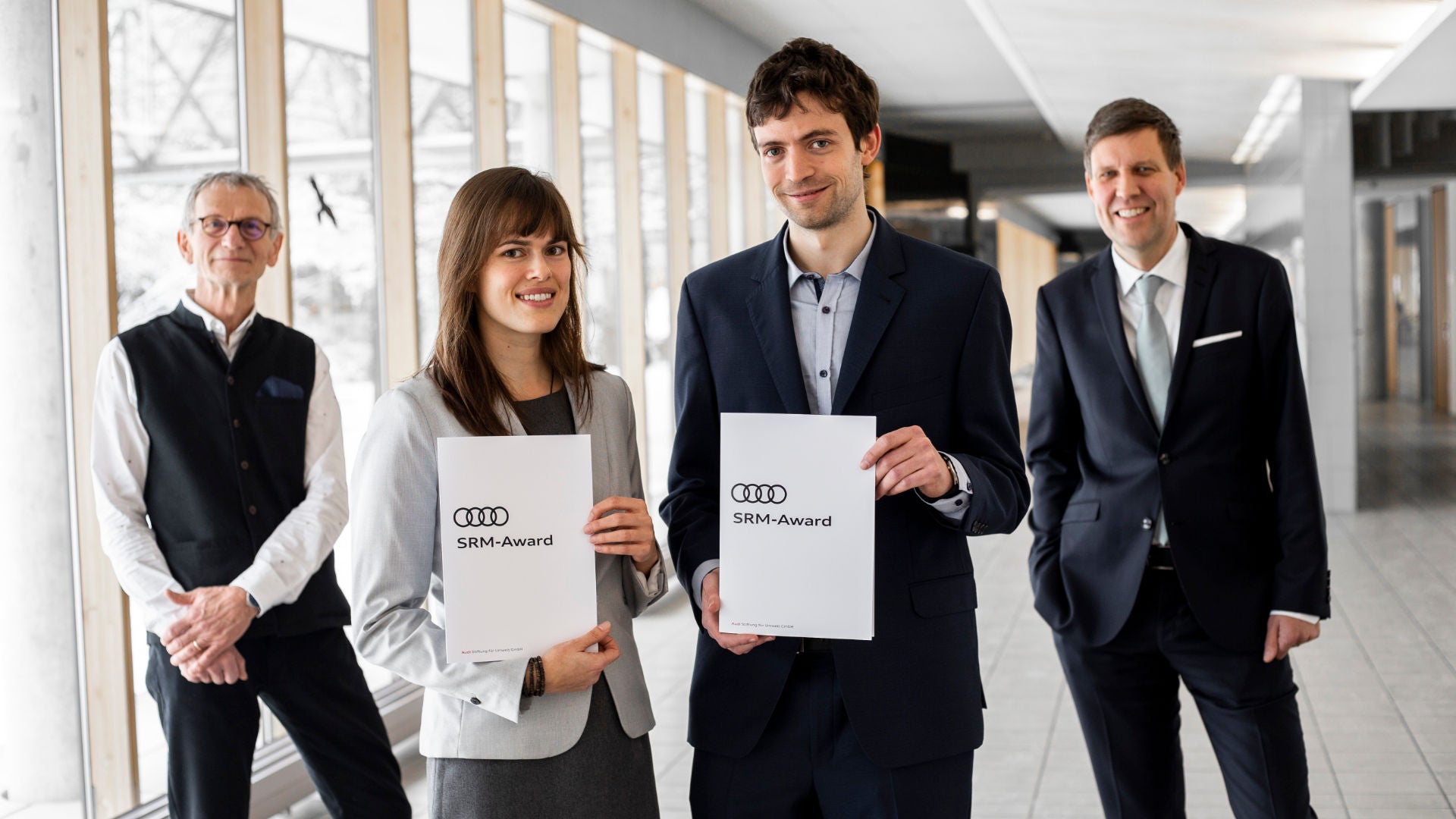
The Audi Environmental Foundation has presented two master’s graduates from the Technical University of Munich with the Sustainable Resource Management (SRM) Award. For the eighth time now the Audi Environmental Foundation has honored outstanding master’s theses in the Sustainable Resource Management course of study in this way. This year’s award went to Julia Möbius and Sebastian Heinz. Each of the winners received prize money of 1,500 euros.In her master’s thesis, Julia Möbius analyzed how young people perceive and use the Berlin city forest. The result: They have hardly discovered the forest as a recreational area for themselves. On site, she interviewed 800 Berlin residents aged between 14 and 25 about their expectations of forests and thus created a comprehensive basis for planning future design concepts for forest areas.The second prize-winning thesis was written by Sebastian Heinz. The master’s graduate dealt with the socio-economic consequences of climate change and the associated uncertain environmental conditions. During a research stay in Hangzhou, China, he conducted an economic experiment with students and farmers to investigate how people living in river basins react to social dilemmas. In his work, Sebastian Heinz showed that fairness and trust contribute to the successful organization of unequally distributed access to water.“Since 2009, the Audi Environmental Foundation has been promoting innovative ideas for environmental protection, as well as scientists and their research into sustainable resource management. With the SRM Award, we are honoring two young researchers who are concerned with the forest and the important resource of water,” says Rüdiger Recknagel, Chief Executive of the Audi Environmental Foundation.
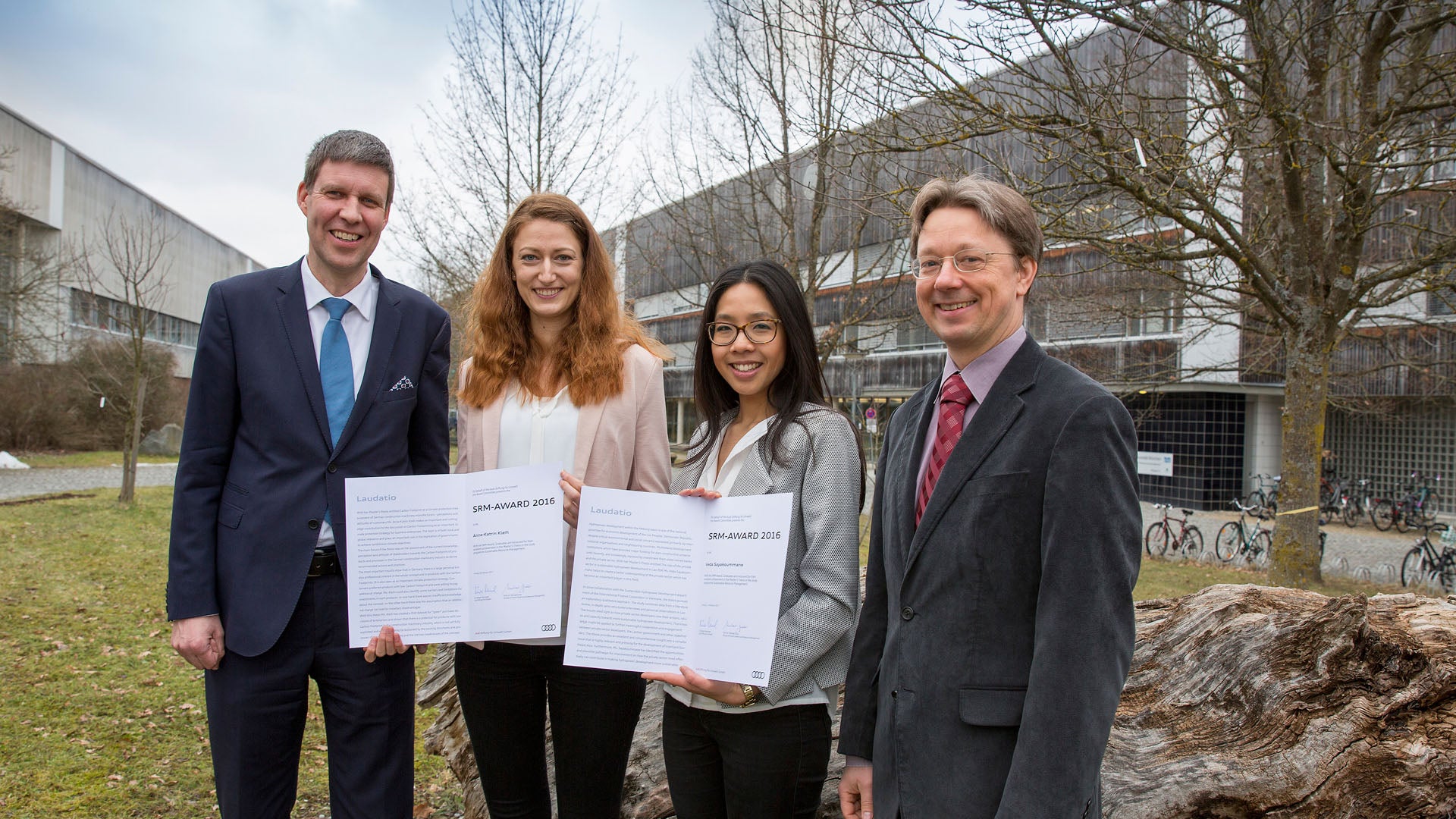
2016 SRM AWARD - Audi Environmental Foundation honors young scientistsFor the sixth time, Audi Environmental Foundation GmbH has presented the SRM Award for the best thesis in the resource management degree course at the Technical University of Munich.The Audi Environmental foundation has honored two young scientists with the Sustainable Resource Management Award (SRM). For the sixth time now, the Foundation has presented this award for the best theses on the master’s course for sustainable management at the Technical University of Munich (TUM). The prize winners addressed the CO2 footprint as a climate protection measure in the German construction machinery industry and discussed strategies for the more sustainable use of hydroelectric power. Anne Katrin Kleih and Veda Sara Sayakoummane received prize money of 1,500 euros for their achievements.The research assistant and doctoral student at the School of Horticultural Economics at Geisenheim University, Anne Katrin Kleih from Wiesbaden, examined the current situation regarding the level of knowledge concerning the CO2 footprint of production and processes in the German construction machinery industry. This CO2 footprint is regarded as a key factor for climate protection. At the same time, she assessed the attitude of people involved in the industry. Her thesis constitutes a database for further developing environmentally informed purchasing decisions by companies, taking into account selected environmental indicators such as carbon footprint and resource consumption. Kleih also pointed out the untapped potential for products of the construction machinery industry with low carbon footprint.The second prizewinner, Australian-born Veda Sara Sayakoummane, determined ways for the private sector to contribute towards the more efficient and sustainable development of hydroelectric projects. She refers to the controversial debate about the planned expansion of the use of hydroelectric power as a source of energy in Laos and provides an insight into the complex subject, which is relevant for the overall development of Southeast Asia. This knowledge lays the foundation for a constructive discourse between private-sector project developers, government departments and other involved parties.
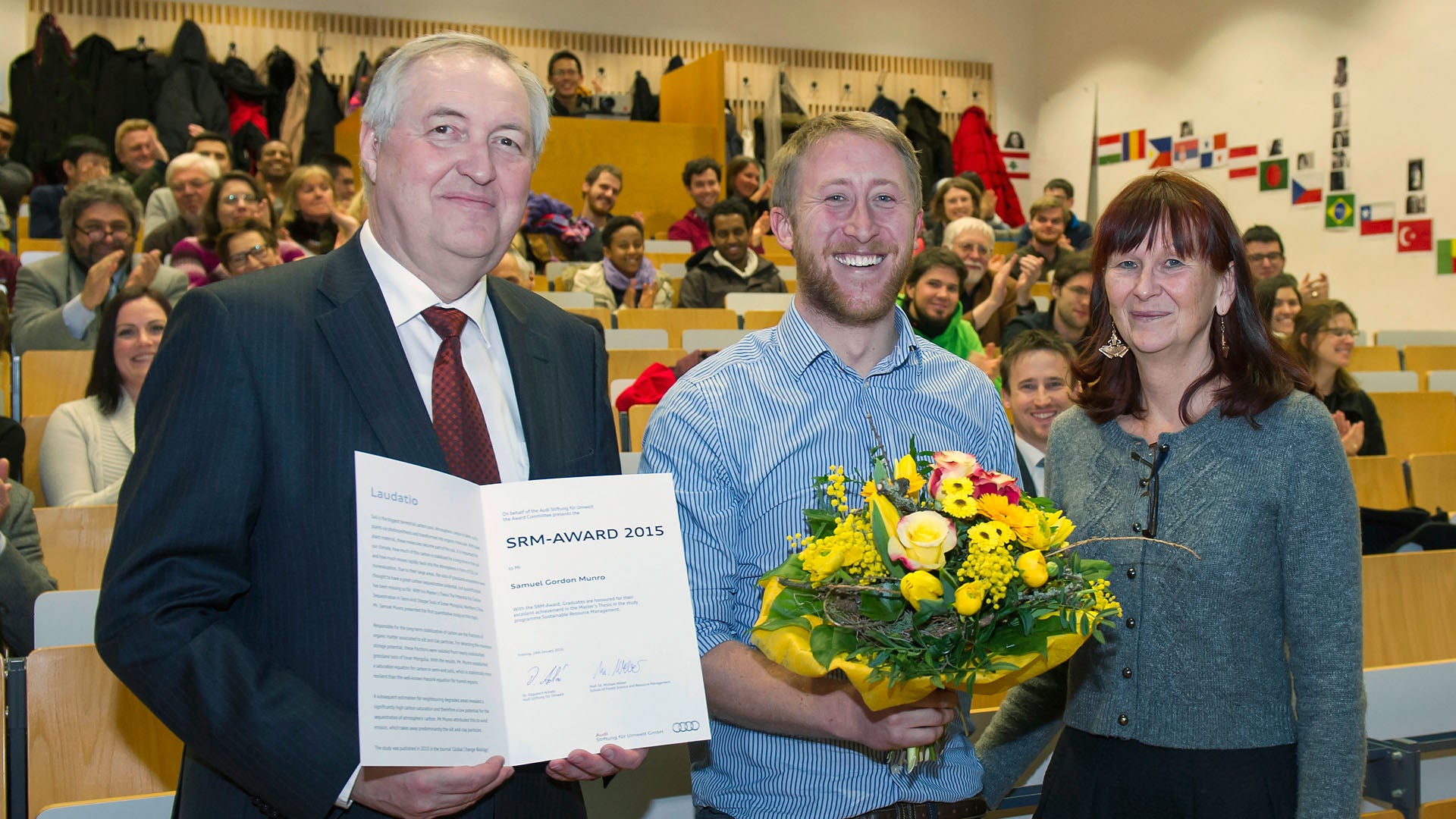
2015 SRM AWARD - Audi Environmental Foundation presents the award for a master’s thesis on climate protection For the fifth time, Audi Environmental Foundation GmbH has presented the SRM Award for the best thesis in the resource management degree course at the Technical University of Munich. Audi Environmental Foundation GmbH has awarded the Sustainable Resource Management Award (SRM) for the fifth time. With this prize, the Environmental Foundation recognizes the best theses each year in the degree course in sustainable resource management at the Technical University of Munich (TUM). This year, the prize goes to the Australian Samuel Gordon Munro for his master’s thesis on carbon storage in the semi-arid Mongolian steppes. The winner receives prize money of 1,500 euros. Munro investigated the potential of the Mongolian grasslands for binding atmospheric CO2. Focusing on largely untouched grasslands, he succeeded in creating the first ever reference for their maximum carbon storage capacity. Soil is regarded as the largest terrestrial carbon sink. In his thesis, Munro discovered that, surprisingly, land that has been affected by severe erosion, arable farming or intensive grazing has a markedly high level of carbon saturation and consequently only a very low CO2 storage capacity. With this finding that is contrary to original assumptions, the quantitative contribution of grasslands to the global storage capacity must be reassessed. His thesis supplies important data on how land usage can be changed in the future to benefit climate protection.
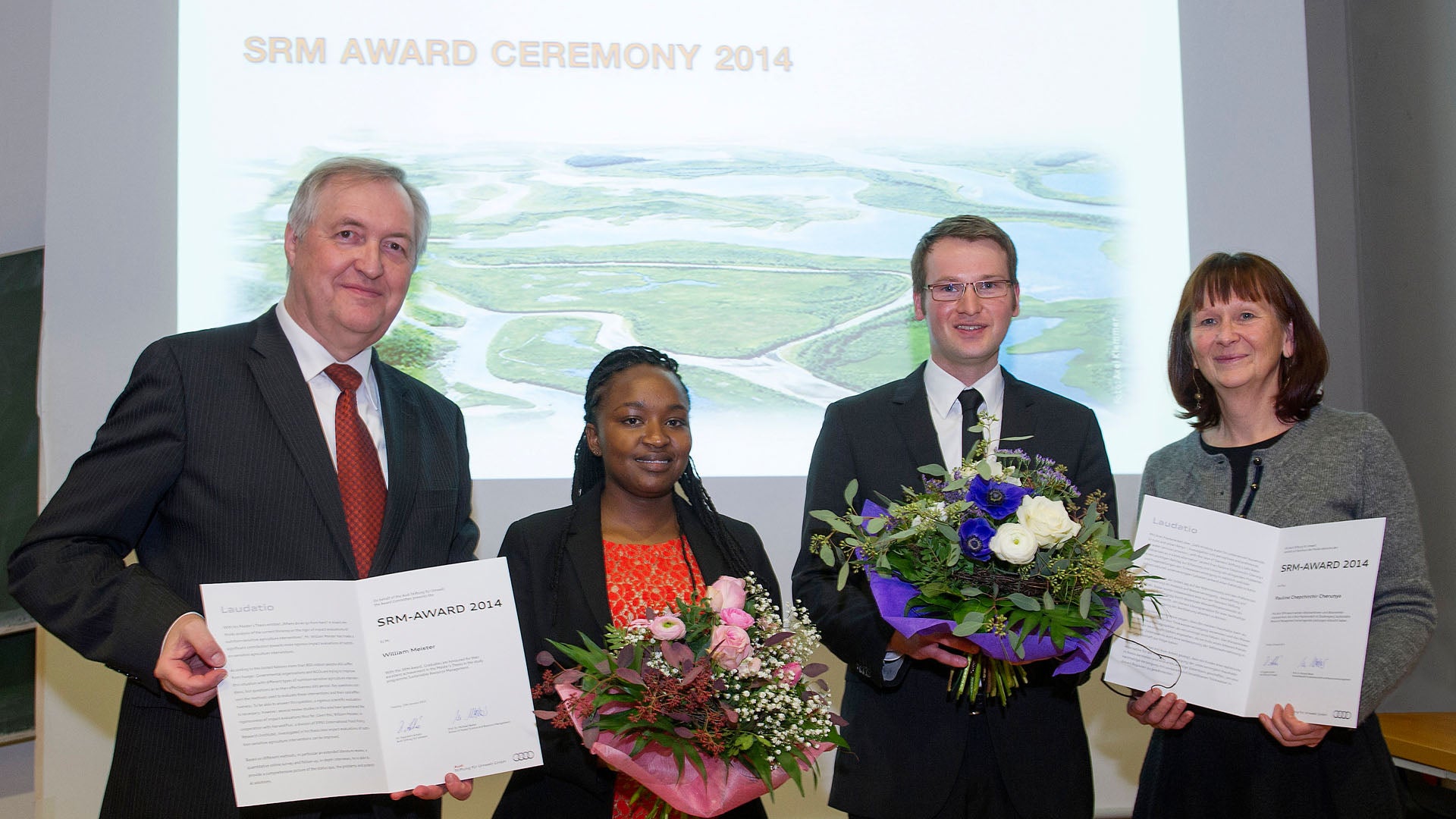
2014 SRM AWARD - Award presented for a thesis on the topic of sustainabilityFor the fourth time, Audi Environmental Foundation GmbH has presented the SRM Award for the best thesis in the resource management degree course at the Technical University of Munich.The SRM Award (Sustainable Resource Management), which was presented this year for the fourth time, went to Pauline Chepchirchir Cherunya and William Meister. Their research findings explore approaches to more efficient resource use in developing countries. Each prizewinner received a prize of € 1,500 for their outstanding master’s theses.
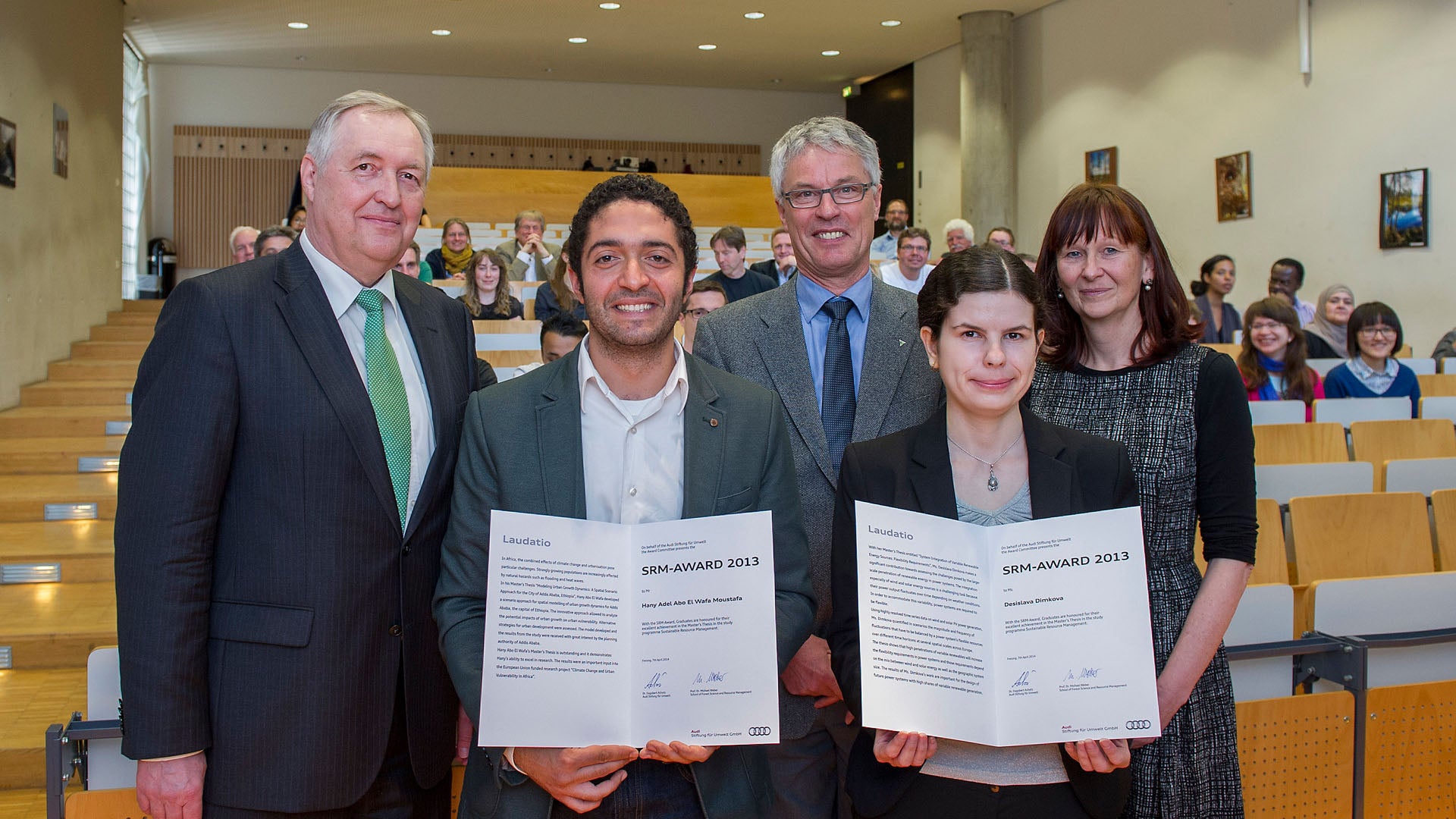
2013 SRM AWARD - Award presented for master’s theses on resource management Prize for the best theses: For the third time, Audi Environmental Foundation GmbH has presented the SRM Award in the Sustainable Resource Management (SRM) master’s degree course at the Technical University of Munich. This year the jury honored Desislava Dimkova and Abo El Wafa for their research results concerning a sustainable man-environment system. Each of the winners were delighted to receive a prize of € 1,500. Desislava Dimokova focused her work on the challenges involved in the integration of renewable energy sources into the electric power system. Her concept serves as an important basis for the design of future power systems with a high proportion of fluctuating energy sources such as wind and the sun. The second prizewinner, Abo El Wafa, designed a possible scenario for urban development in the Ethiopian capital of Addis Ababa against the background of climate change and the urbanization process in Africa. With this, he made an important contribution to the EU-sponsored research project “Climate Change and Urban Vulnerability in Africa”.
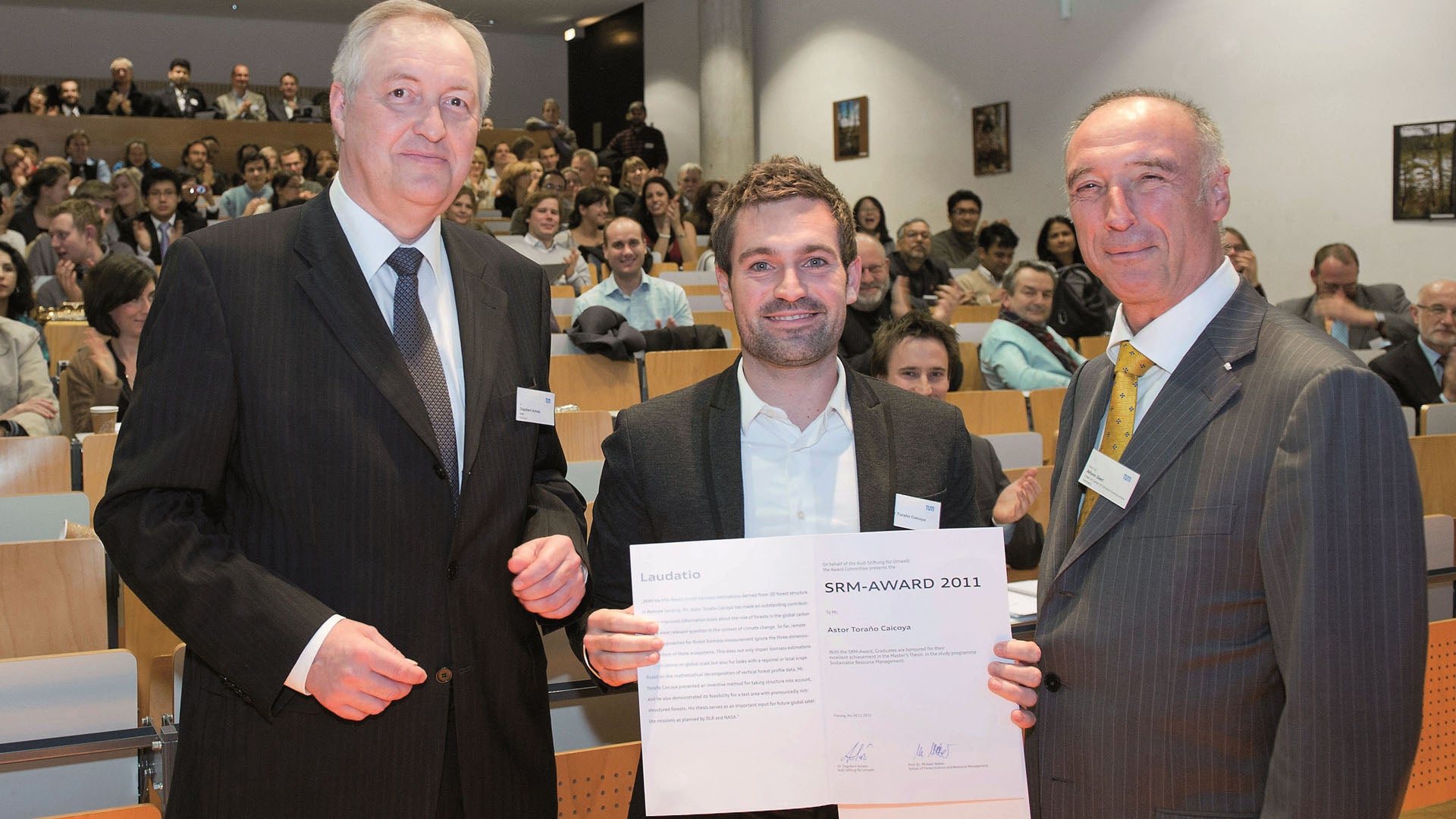
2011 SRM AWARD - Award presented for a thesis on the topic of sustainabilityFor the first time, Audi Environmental Foundation GmbH has awarded a prize for the best thesis in the resource management degree course at the Technical University of Munich.The new SRM Award promotes outstanding achievements in the Sustainable Resource Management (SRM) field of science. The Foundation has awarded the prize to the 27-year-old scientist Astor Toraño Caicoya for his innovative contribution to climate research. The prize money is € 1,500.