Microalgae – multitalented organisms for a livable future?
We all have probably eaten algae at some point – wrapped around maki sushi or in a highly processed form commonly used as a thickening agent in instant meals, such as carrageen. Algae, and microalgae in particular, have also been cultivated at the industrial level since the 1950s as an alternative feedstock for other natural raw materials for a variety of areas of application.
02/26/2021 — Reading Time: 3 min
Microalgae are small single-cell algae that are usually responsible for the characteristic green color of bodies of water. There are various possible applications depending on the type of microalgae, ranging from food products, where they create the fresh green color of popular smoothies, to medicine and cosmetics, and all the way to the industrial area.
The algae can be optimized by means of molecular biological procedures such that they serve as efficient raw material suppliers for fine chemicals. The fatty substances in the biomass can be used to produce biofuel, for example. An airplane fueled only with “algae-based kerosene” was able to take off back in 2010. Microalgae are being investigated for their potential use as a biological feedstock for alternative fuels. So they may support mobility with reduced lifecycle greenhouse-emissions in the future.

Algea on agar plates.
Intensive research has already been conducted on the industrial production of energy-rich microalgae. In laboratory and pilot studies, biomass yields of selected microalgae strains were reported to be higher than those of certain agricultural crops and the water and land consumption were reported to be significantly lower.
As part of this project, the Audi Environmental Foundation support basic research into production pathways for biofuels and fine chemicals from modified microalgae strains, in this case the green alga “chlorella vulgaris.” The purpose of this research is to evaluate the environmental performance of microalgae-based production systems, including their potential impact on greenhouse-gas emissions in specific applications.
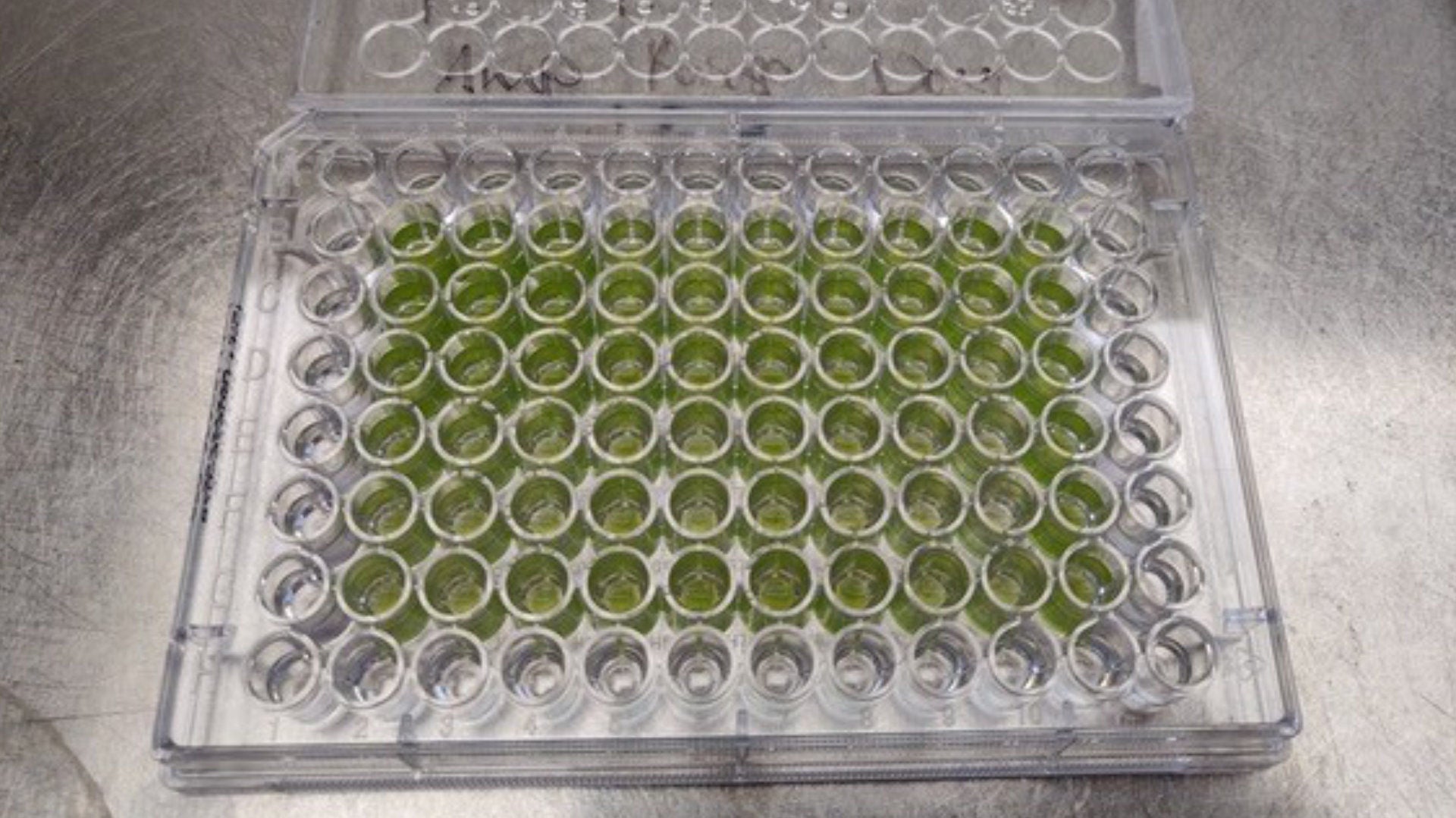
Algae mixed with antibiotics.