Girls’ Day at the Environmental Campus: Experiencing Innovation and Environmental Protection
02/06/2026 — Reading Time: 3 min
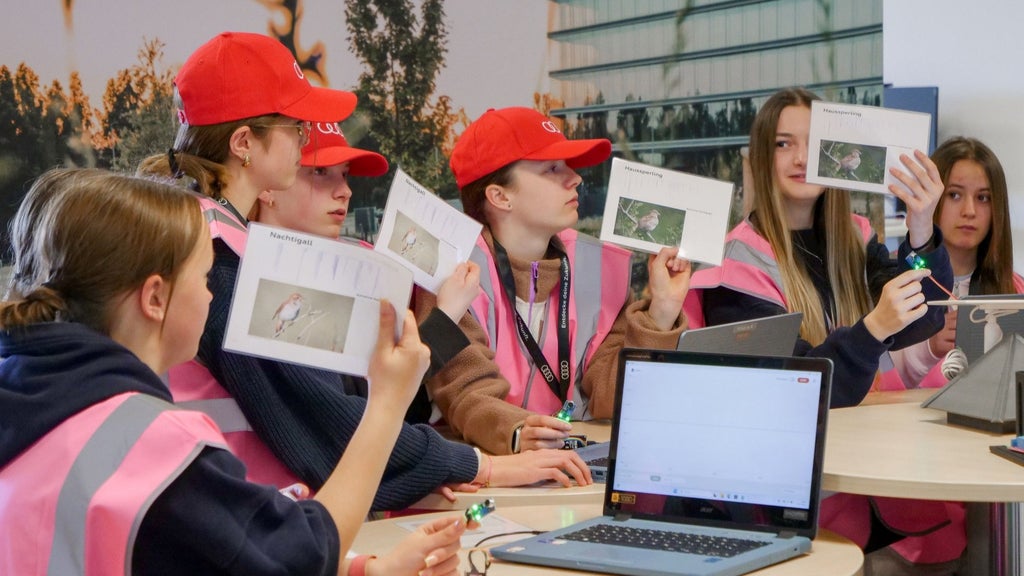
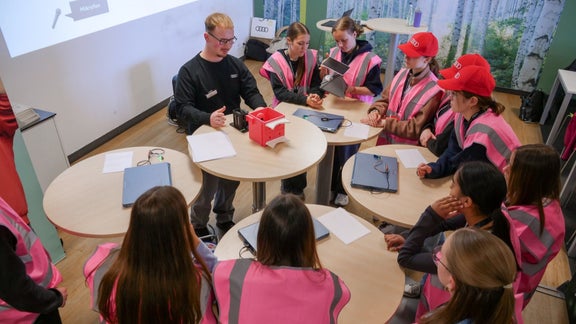
On this year’s Girls’ Day, the Audi Environmental Foundation, together with Audi Environmental Protection, was represented for the first time in both Münchsmünster and Ingolstadt. The aim was to give students practical insights into technical professional fields and to demonstrate how closely technical work can be linked with environmental and climate protection.
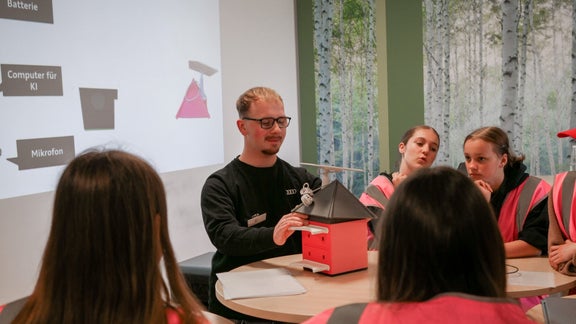
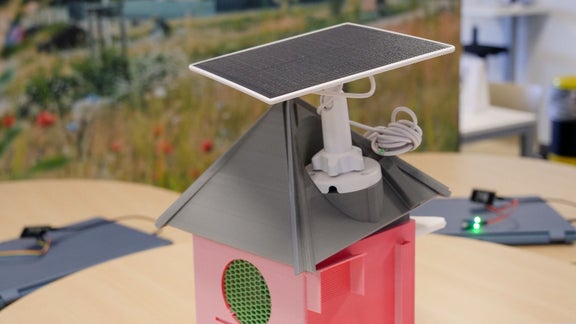
At the center of the program was the Audi Horchbox, a project developed by the Audi Environmental Foundation in cooperation with the Bavarian Association for the Protection of Birds (LBV) and apprentices of AUDI AG. At the beginning, the apprentices presented the project and provided insights into its development and implementation – from the technical conception to its application in the context of biodiversity monitoring.
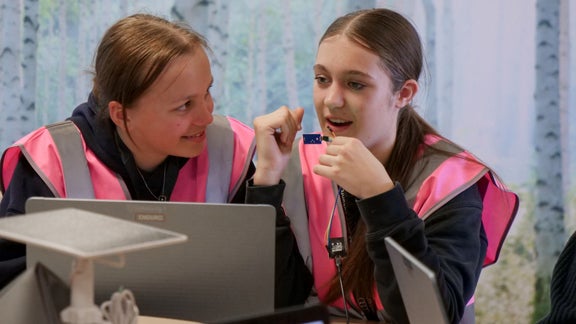
Following this, the participants became active themselves and experienced the technology in practice. Using Arduino components and an oscilloscope, they made bird calls visible and learned to recognize characteristic differences between different species such as the grey partridge and the yellowhammer. In this way, it became step by step understandable how the Audi Horchbox works and what role technical systems can play in environmental research.
The Horchbox analyzes recorded bird calls, identifies patterns, and compares them with reference data using artificial intelligence. In this way, bird species can be identified automatically – an approach that opens up new possibilities for biodiversity monitoring.
The workshop showed how theoretical knowledge and practical application can complement each other in a meaningful way. At the same time, it gave the participants the opportunity to get to know technical working methods, ask questions, and above all gain their own experience.
The strong interest and active participation underlined how important such formats are for fostering curiosity about technical professions and a stronger understanding of environmental contexts. The Girls’ Day once again showed how sustainable thinking and technical design belong together and can be experienced directly.