Experiencing Environmental Policy: UN Simulation on the Plastics Agreement on the Zugspitze
20.07.2026 — Reading Time: 5 min
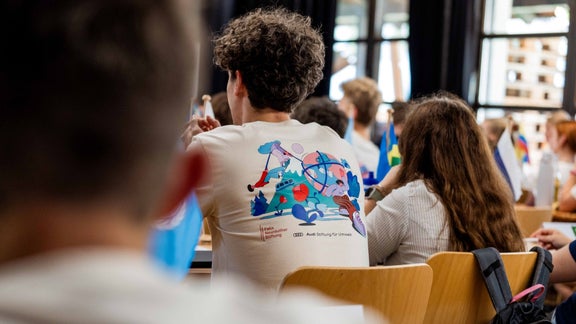
These were exactly the questions addressed by 58 students during the first UN simulation on Germany’s highest mountain. Over the course of two days, the participants took on the roles of UN delegates, represented the interests of different countries, and negotiated the future of a global plastics agreement.
The focus was on the topic “UN Plastics Agreement: What’s Next?” After months of preparation, the participants developed country positions, formulated arguments, and elaborated negotiation strategies. It quickly became clear that international environmental policy thrives on the exchange of different perspectives, on compromise, and on the willingness to work together to develop solutions.
A Change of Perspective on Germany’s Highest Mountain
Set against the unique backdrop of the Zugspitze, the two-day UN simulation began. Students from Benediktinergymnasium Ettal, Werdenfels-Gymnasium, and Erzbischöfliches St.-Irmengard-Gymnasium also gained valuable insights into current environmental and sustainability issues.
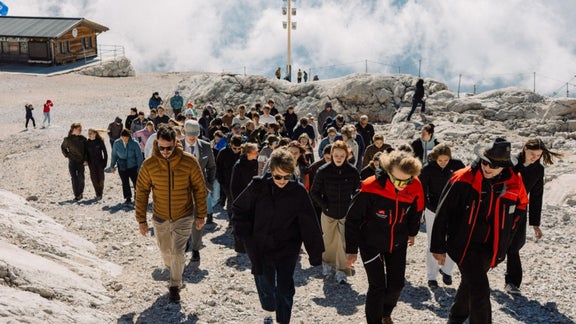
As part of a guided tour on the Zugspitze, participants gained direct insights into the impacts of climate change in alpine environments. On site, it became visible how much the glacier has retreated in recent years and which changes can already be observed in high-alpine ecosystems today. The unique setting made global environmental changes tangible and provided valuable impulses for the subsequent discussions.
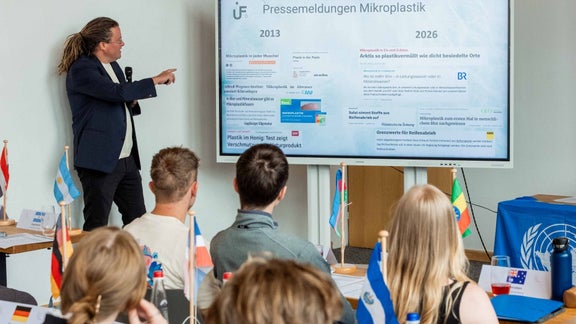
Following the first rounds of negotiations and a joint lunch break, participants attended an expert presentation by our project partner URBANFILTER. Daniel Venghaus (University of Hildesheim) explained how microplastics enter waterways through tire abrasion and road runoff and how the filtration system developed by URBANFILTER helps retain pollutants as close as possible to their source before they enter the environment.
The students then immersed themselves in their roles as representatives of different countries. With thorough preparation, well-founded country positions, and initial negotiation strategies, they laid the foundation for the negotiations on the following day.
Negotiating, Discussing, and Developing Solutions Together
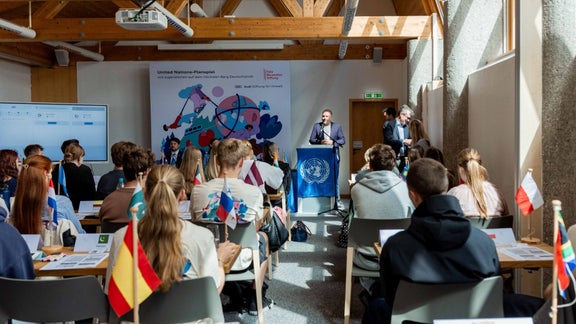
On the second day of the event, participants gathered at the PULS Youth Center in Garmisch-Partenkirchen to continue the simulated UN negotiations. The focus now shifted to the question of how an effective international plastics agreement could be designed and which compromises would be required to achieve it.
This time, the expert impulse was provided by Clemens Feigl, co-founder of everwave and one of our network partners. Using practical examples, he demonstrated the consequences of plastic pollution for rivers and oceans worldwide and showed how innovative technologies can help remove waste from waterways and prevent it from entering aquatic environments in the first place.
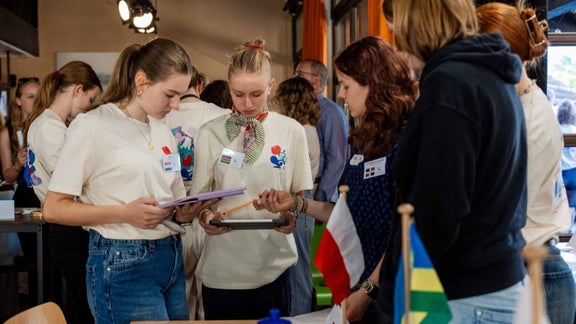
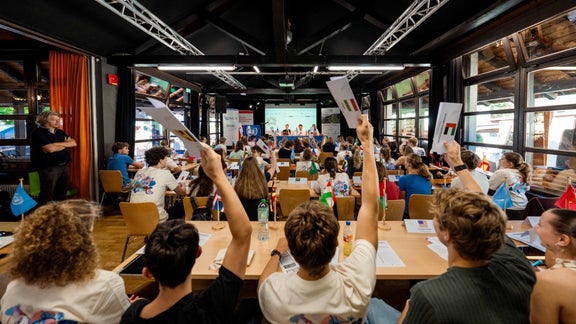
The simulation that followed involved intensive discussions, negotiations, and argumentation. The students represented different national interests, searched for common positions, and experienced firsthand how complex international environmental policy can be. At the same time, it became clear how important dialogue, changes in perspective, and international cooperation are for addressing global challenges.
Particularly impressive was the strong commitment shown by the participants. With great seriousness, well-founded arguments, and genuine interest, they contributed to the debates and demonstrated that young people are ready to take responsibility and actively contribute to solutions.
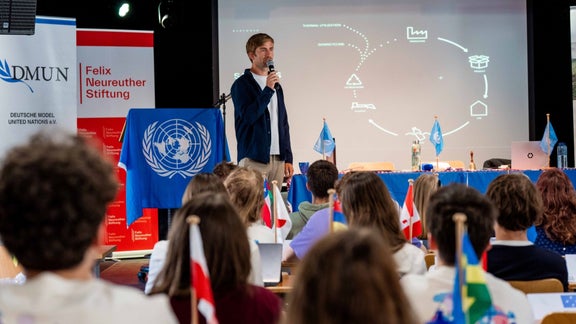
The UN simulation was initiated by the Felix Neureuther Foundation, and organized in cooperation with the Audi Environmental Foundation, and the United Nations (Basel, Rotterdam and Stockholm Conventions) and implemented together with DMUN e.V. Two days filled with discussions, changes in perspective, and negotiations made international environmental policy tangible for the participating students. For everyone involved, the simulation was an inspiring experience and demonstrated the potential of young voices, collaborative solutions, and international exchange.